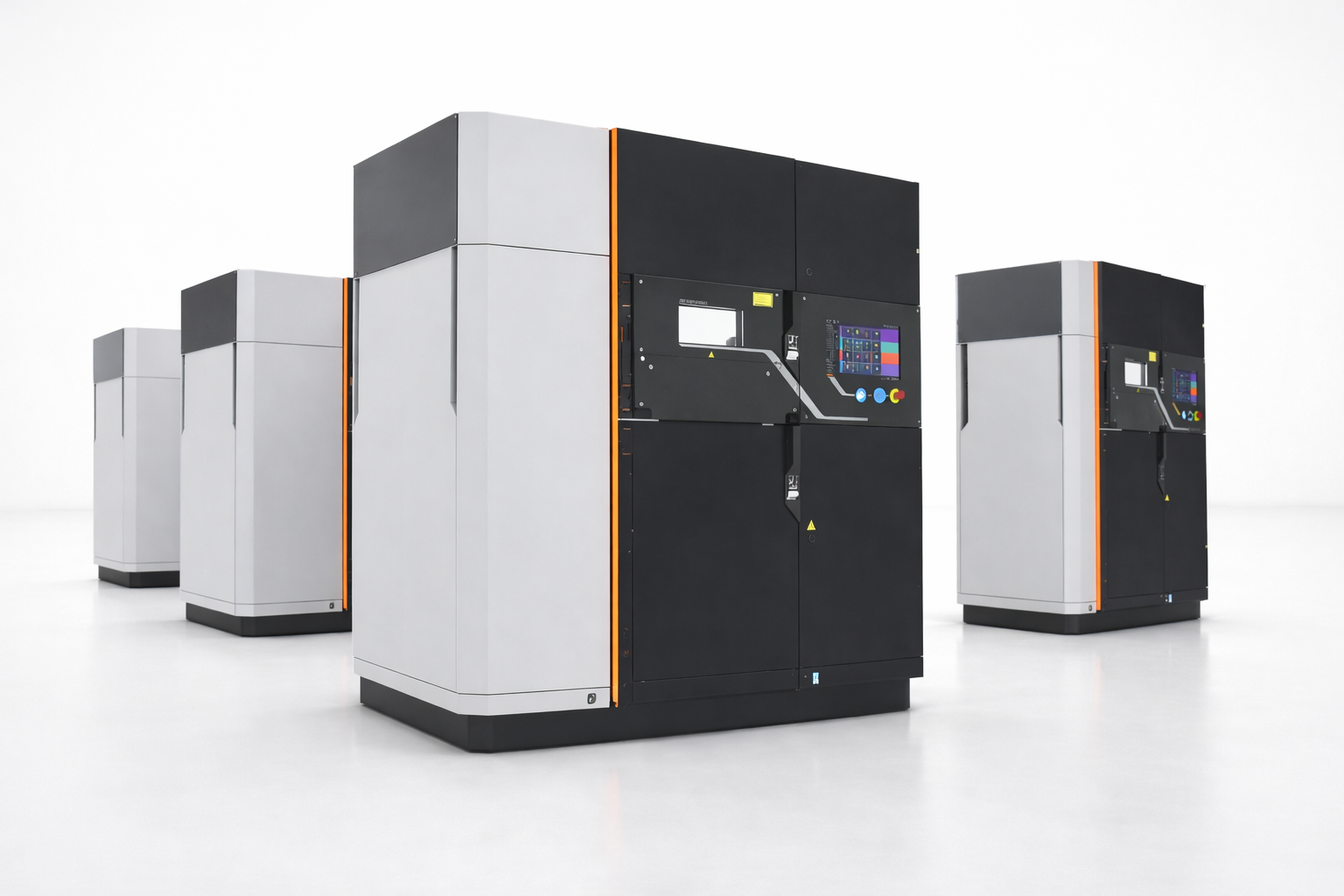


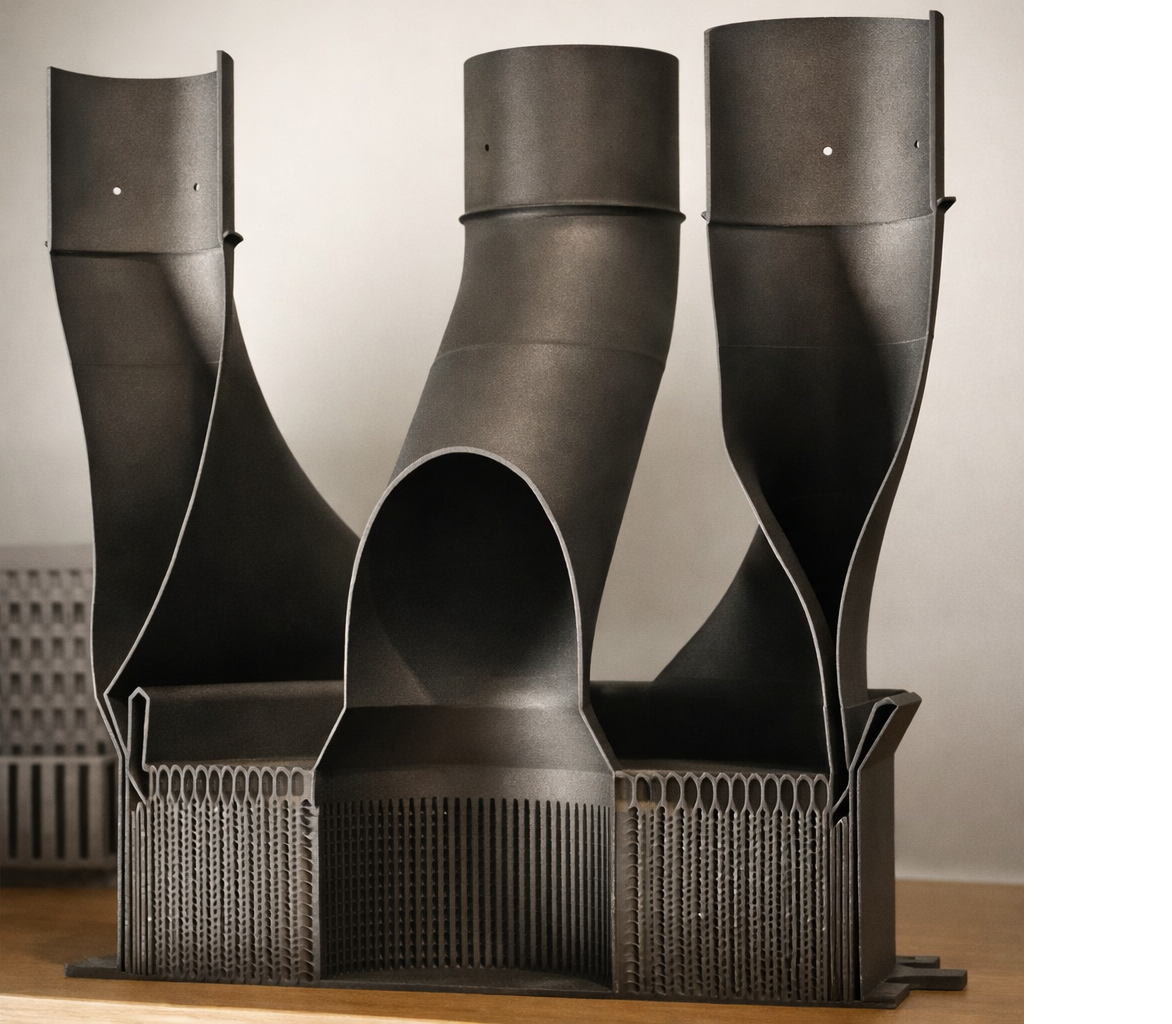
The customer needed a computing solution that could be physically integrated into its additive manufacturing machines, which had strict limitations on height, depth, and mounting orientation. The computer needed to sit flush within the assembly and avoid interference with product branding or airflow. Performance was also critically important. The hardware needed to process large volumes of 3D imaging data in real time, while remaining stable during long-duration operation in tightly controlled environments. The system also needed to offer the headroom and flexibility to adapt to future developments in the customer’s machine architecture and control software. Standard off-the-shelf computers could not provide the mechanical adaptability or component longevity required. The customer therefore required a custom engineered platform that would meet the specification precisely, supporting ongoing development, which could be manufactured consistently over the full product lifecycle.
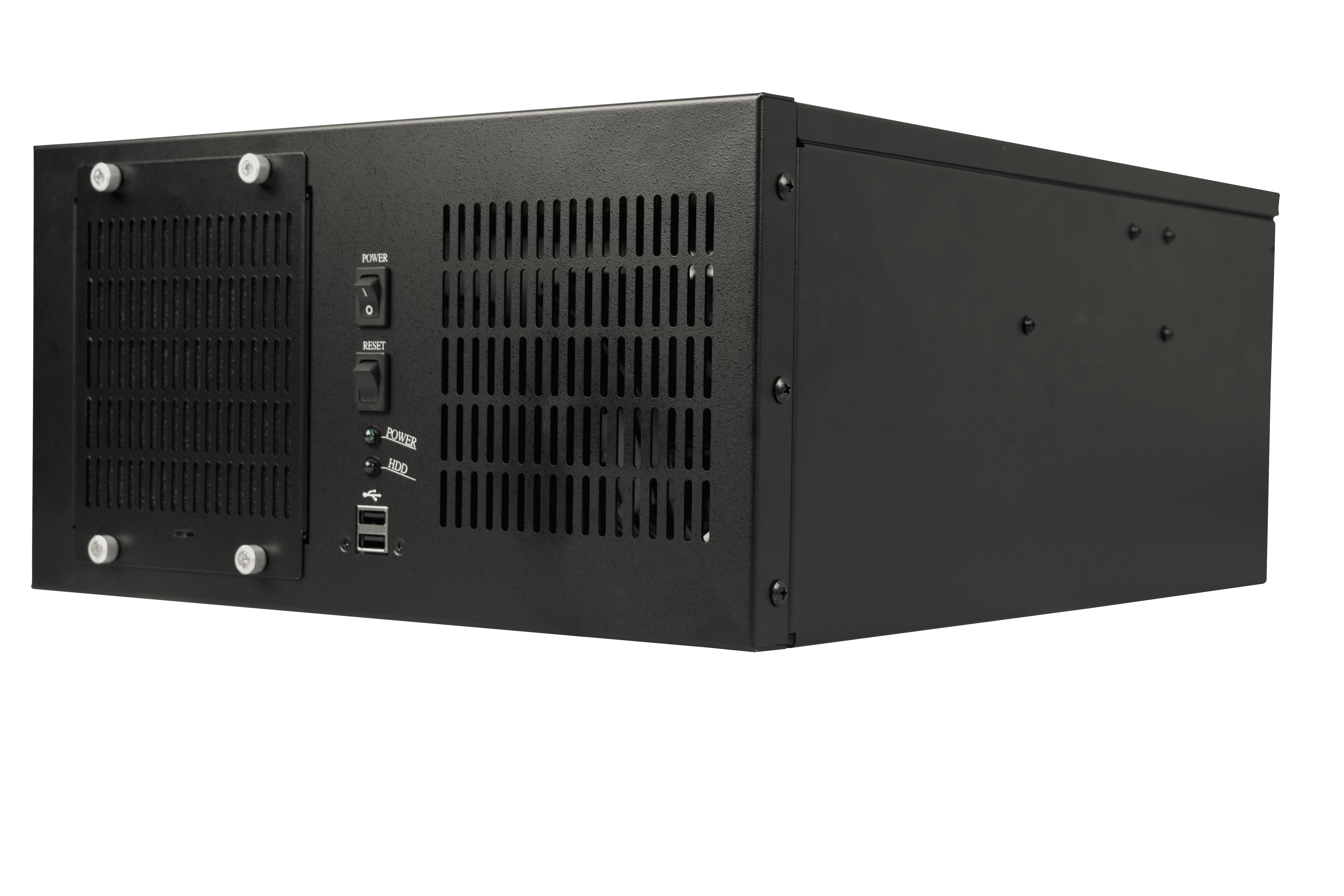
The customer worked collaboratively with Captec’s team to design a computing platform ideally suited for its specialised additive manufacturing environment. The joint approach enabled effective design alignment and early problem solving while Captec’s expert teams optimised mechanical design, engineering and component selection aligned with simplified lifecycle management to ensure the system would operate reliably throughout extended product use. Captec engineered a custom 4U chassis that aligned precisely with the dimensional requirements of the customer’s machine architecture, enabling seamless integration within the additive manufacturing unit. The system was designed with reserved expansion capacity to accommodate future enhancements, ensuring
the platform could evolve alongside the customer’s technology roadmap. To achieve a flush system interface, the on-screen display (OSD) was relocated to the rear of the chassis, while inside the system, Intel Core processors and graphics cards supported the demanding image rendering, laser control, and 3D modelling workloads central to the manufacturing process. Industrial-grade components rated for continuous 24/7 operation were selected, while cooling, airflow, and internal layouts were optimised to maintain reliability under sustained load. The mechanical design also supported access for maintenance, upgrades and cable routing to support dependable long-term operation.
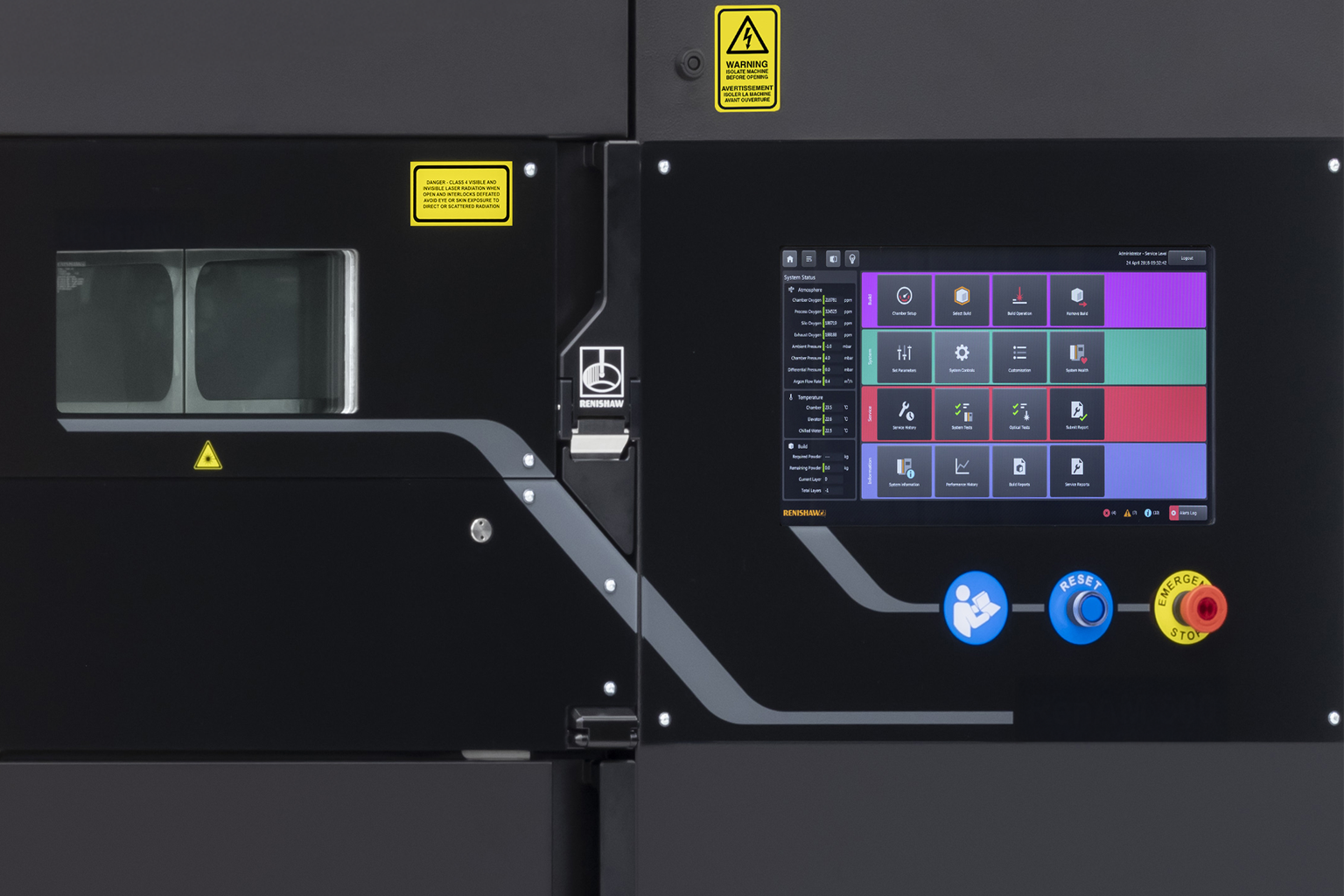
The custom-built computing platform met the operational and environmental requirements of the application and integrated successfully within the customer’s additive manufacturing machines. It delivered the processing capability needed for high-quality image handling and precision laser control while operating continuously in clean, temperature-controlled factory conditions. This ensured the machines could run reliably for extended periods without interruption to the computing function. As the customer’s requirements developed, Captec adjusted the system specification to stay aligned with changes in machine design and control methodology. Component updates were managed carefully to maintain form, fit, and function, ensuring ongoing compatibility with existing installations. The stability of the platform has meant that the computer has remained dependable with existing machines as the customer had refined its metal additive manufacturing process and introduced incremental updates to its technology. The use of industrial-grade components and controlled cooling has contributed to reduced downtime and minimised the risk of in-service failure. Continued lifecycle support from Captec with proactive obsolescence management, and build consistency has allowed the customer to maintain ongoing operation of its installed base while introducing new variants of its additive manufacturing systems.